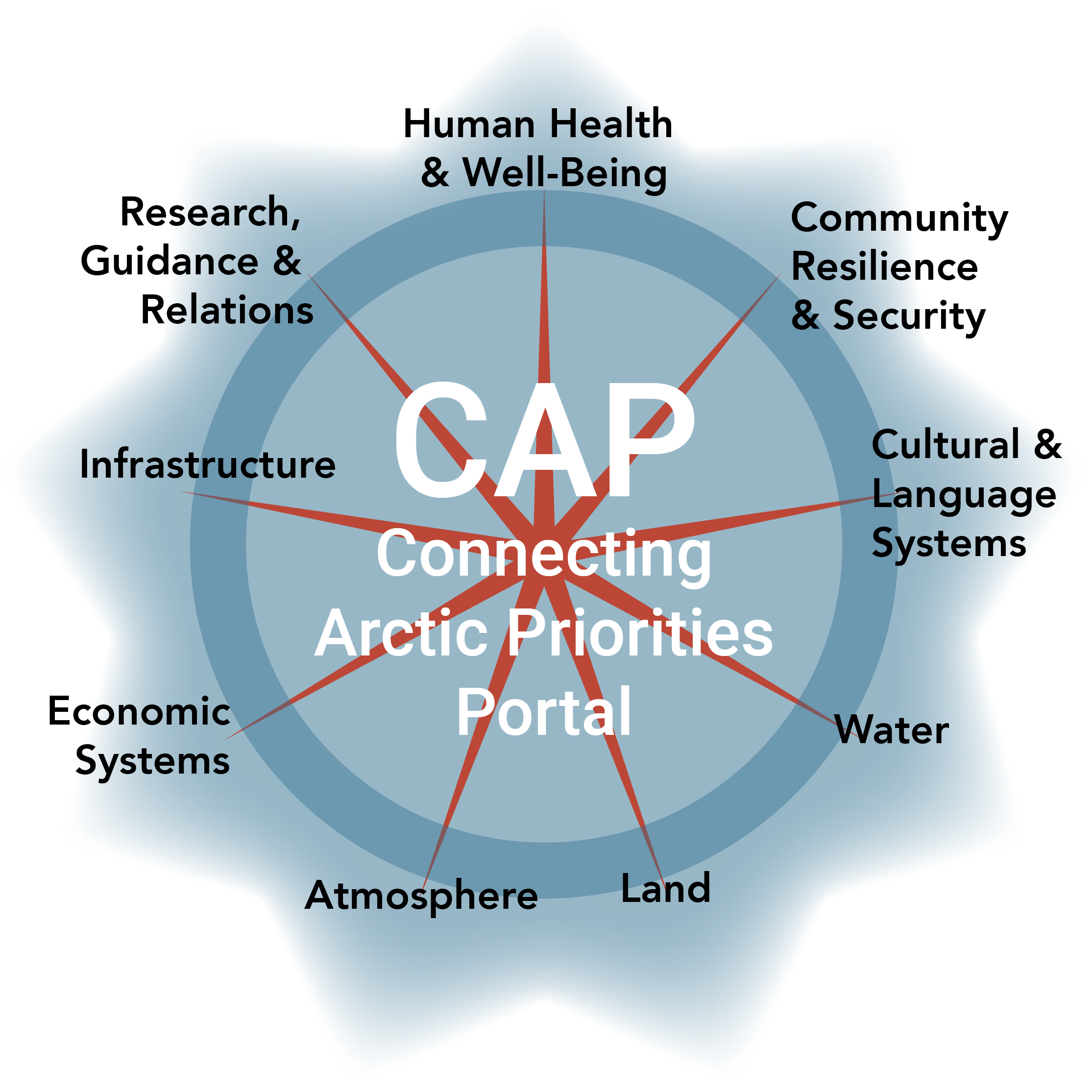
 The CAP Portal is a searchable collection of reports and documents written by Tribes, Arctic communities, and Indigenous organizations. The NNA-CO is providing this collection to facilitate awareness of Arctic Peoples’ priorities and values, which may serve to inform Arctic research planning and meaningful engagement.
The ownership of the documents in this collection remains with the Tribes, Arctic communities, and Indigenous organizations who created and authored them. Use of these resources should not replace community engagement but rather supplement existing strategies for engagement.
Click here to read more about the CAP Portal or to suggest a document to include.
Wildlife Management Summit Report
The Inuit Circumpolar Council (ICC) hosted the Wildlife Management Summit that took place on November 6 to 8, 2017 in Ottawa, Ontario, Canada to deliver on the commitment made in Article 40 of the Kitigaaryuit Declaration, as adopted at the 2014 ICC General Assembly in Inuvik, which, “directs ICC to plan and host an Inuit summit on wildlife management.” The ICC Wildlife Management Summit’s goal was to examine the influence that policies (international, regional, national instruments), environmental change, public perceptions, and changing social economic conditions in the Arctic are having
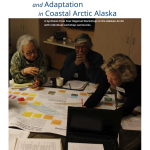
Promoting Resilience and Adaptation in Coastal Arctic Alaska
This synthesis represents a summary of conversations during four workshops held in regional hub communities of Nome, Unalaska, King Salmon and Kotzebue. Over six months in 2016, almost 200 participants from 34 tribes, 14 state and federal agencies, local communities as well as several research institutions and nongovernmental organizations shared their insights on the most urgent risks and vulnerabilities for coastal communities and resources. They also identified key opportunities for collaboration between communities and agencies
Community Observations on Climate Change: Arctic Village, Fort Yukon and Venetie, Alaska
For the Upper Yukon area, climate change has become a daily fact of life, causing a wide range of impacts to the environment, and in some cases to community health. In 2015 the Alaska Native Tribal Health Consortium (ANTHC) and the U.S. Geological Survey (USGS) organized a climate change impacts assessment in Arctic Village, Fort Yukon, and Venetie.
Research Processes and Indigenous Communities in Western Alaska
Research activities have become a regular occurrence in northern indigenous community life, a major factor influencing policy and management affecting these communities, and a source of various community impacts (positive, negative, and otherwise). Research processes span across the disciplines, including work in the natural sciences (e.g. physical oceanographic work, climatological research, fisheries and marine mammal research) as well as the social sciences (e.g. ethnographic studies, socioeconomic impact studies, and harvest survey research).
Inuit Arctic Policy
Over the years, the Inuit Arctic Policy has become the main document for development on many issues in the Arctic and has contributed significantly in numerous ways as the Arctic has changed profoundly since the beginning of this work. Arctic states and others are invited to join with Inuit in the ongoing challenge of building and carrying out a common Arctic vision that is clearly supportive of the Arctic environment and beneficial to humankind.
A Business Plan for Sustainability (2016-2020)
Two significant priorities to accomplish in FY 2015-2016 include identifying sustainable funding and strengthening the capacity and role of the commission as a catalyst for positive Eskimo Walrus Commission: A Business Plan for Sustainability 2015-2020 November 2015. The development of this Business Plan for Sustainability is directly tied with outcomes identified for both of those priorities.
Kitigaaryuit Declaration
As declared by the Inuit of Alaska, Canada, Greenland, and Chukotka, on the occasion of the 12th General Assembly of the Inuit Circumpolar Council (ICC) from 21-24 July 2014 in lnuvik, Canada, and in the context of the Assembly theme, Ukiuqta'qtumi Hivuniptingnun - One Arctic, One Future
Northern Bering Sea Resolution 2014
Resolution for Stronger and More Lasting Protection of Tribal Subsistence Resources in the Northern Bering Sea and to Ensure Tribal Self-Determination for Decisions Impacting These Resources
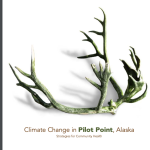
Climate Change in Pilot Point, Alaska: Strategies for Community Health
In the Yupik and Aleut community of Pilot Point residents report changes to the weather, landscape, plants and wildlife. Extreme weather events are thought to be more common, the timing of seasons is more unpredictable, erosion to shorelines is occurring at a rapid rate, and consequentially, vulnerability to flooding is increasing. Identified health concerns include food security, damage to health-critical infrastructure, injury and behavioral health issues related to extreme and unusual weather conditions.