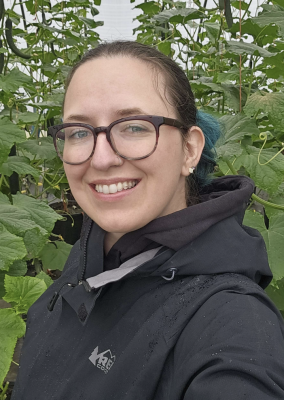
April Norsby's interests in plants started in her grandmother’s garden, long before she imagined it would lead her to studying frozen ground and Alaska’s food future. What began as a love of growing things has become a curiosity about how people, plants, and land shape one another.
April is an interdisciplinary studies student at the University of Alaska Fairbanks, combining ethnobotany, natural resource management, and biology, with a focus on agriculture and food security. April has called Alaska home since 2013 and brings over 15 years of experience in plant production across agricultural settings, including greenhouses, farms, indoor cultivation, and the public works that goes into Georgeson Botanical Garden. That practical background shapes the questions she brings to her research. Ethnobotany is at the heart of her academic path because it connects plants with the stories, knowledge, and everyday practices of the people who rely on them.
Through the NNA-CO REU program, April is exploring how permafrost thaw affects agriculture in Interior Alaska. The project connects soil moisture, ground temperature, and landscape measurements with a local producer’s firsthand experiences. April is especially interested in what can be learned by bringing those perspectives together, from understanding changing growing conditions to the decisions farmers make about where to plant and how to manage their land.
Outside of her studies, April loves visiting local farmers markets, especially the Tanana Valley Farmers Market in Fairbanks, and attending community bazaars and art events. Discovering what people grow, make, and share is one of her favorite ways to connect with a community. April also loves traveling and experiencing the places, traditions, and everyday stories that make each destination unique.
April hopes to contribute to research that values community knowledge and supports Alaska’s food security. She welcomes opportunities to share our project and connect with researchers, growers, and community partners interested in ethnobotany, northern agriculture, and environmental change. For April, this work comes back to one idea: what happens below the surface is changing decisions above it.