September, 2026
- 2026 NNA Annual Community Meeting Recap
- Invitation to Participate in a Study on the Impact of the NNA Initiative
- Contribute to a Special Issue on NNA Research
- Call for AK STEAM Newsletter Items
- Applications Open For NSF-Funded Data Science Training Course
- Alaska Forum 2027 Conference - Call For Presentations
- Navigating New Ways of Arctic Research
- Register now for the 2027 Toolik Field Station All Scientists Meeting
- Upcoming Events

-
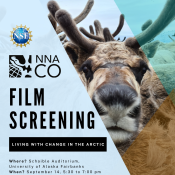
On Monday, September 14, from 5:30–7:00 PM AKT at Schaible Auditorium at the University of Alaska Fairbanks, the NNA-CO hosted an evening of short films exploring how Arctic and Indigenous communities are experiencing and responding to change. The films shared the voices and stories of people living these changes firsthand. Following the screening, attendees were invited to stay for conversation and reflection.
This event was free and open to the public.
August, 2026
- NNA-CO to Host Virtual ‘Research Ethics in Engaging with Arctic Communities’ Workshop with Cana Uluak Itchuaqiyaq on September 14
- Invitation to Contribute Slides Highlighting Communication Efforts at NNA Annual Meeting
- Save the Date: Joint (AC)³ - MOSAiC Conference 2027
- Follow the Arctic Data Center on LinkedIn
- Register by September 9 for IARPC Collaborations Mentorship Program - Open to All in the Polar Research Community!
- NNA Project Highlight - Fresh Eyes on Ice: Connecting Arctic Communities through a Revitalized and Modernized Freshwater Ice Observation Network
- Upcoming Events
Issue 12 - Summer 2026
- Classroom Resources
- Monitor green-down with your students this fall
- Participate in Adopt-a-Stream activities
- Rural schools: Apply to Smithsonian STARS to receive free astronomy education resources!
- Join REAP's 2026 Power Pledge!
- Science Stars
- Congratulations to Kevin Zhang and Annamaria Pustina!
- Celebrating Science
- Students in Wrangell monitor bears for three summers running
- Opportunities for Educators
- Credit opportunity! Introduction to teaching science in Alaska
- Get great resources from the Science Friday Initiative and help create a new online community for educators
- Toshiba America Foundation offers grants for K-12 educators to bring STEM education to their classrooms
- Opportunities for Students
- Join the 2026-2027 season of LEGO Robotics!
- Fairbanks Children's Museum Day Camps: No School, No Problem!