-
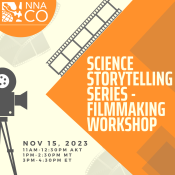
This meeting featured a 90-minute filmmaking workshop led by Dr. Ryan Vachon (Provare Media), focused on knowledge translation and science communication. He worked with attendees to identify project mission statements, provided methods for storyboarding and communication, discussed camera and audio gear and filming approaches, and offered an overview of editing basics.
-
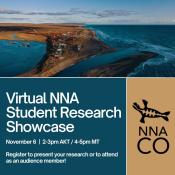
The NNA-CO hosted a virtual NNA student research showcase featuring 2023 NNA-CO undergraduate research students and other graduate and undergraduate students affiliated with NNA projects. Students briefly presented their research, followed by a Q&A session with the audience, providing an opportunity to receive feedback prior to AGU 2023 and the 2024 NNA Annual Community Meeting.
-
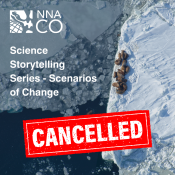
Participants joined the NNA-CO education and outreach team for a hands-on session practicing a technique that translated data from Arctic region projects and climate projection scenarios into stories of possible futures and actions for youth and adults. The workshop provided lesson plans and hands-on practice with the technique.
-
The one-hour virtual event explored approaches to making Arctic social and environmental science open science within the context of collaborative and convergent research, while upholding Indigenous data sovereignty. Panelists included Dr. Julia Lowndes of Openscapes and NCEAS UC Santa Barbara, Matt Fisher of the QGreenland project at NSIDC, and Mohammad Afzal Shadab of the US Association of Polar Early Career Scientists and the University of Texas at Austin.
-
The NNA-CO education and outreach team hosted a hands-on session focused on practicing how to facilitate community storytelling around project science topics. The workshop shared lesson plans and techniques to help participants strengthen their engagement and outreach efforts. The session was presented by Dr. Katie Villano Spellman, a Research Associate Professor at UAF’s International Arctic Research Center, who led and collaborated on science education and public participation projects including Arctic and Earth SIGNs, Winterberry Citizen Science, Fostering Science, and Fresh Eyes on Ice.